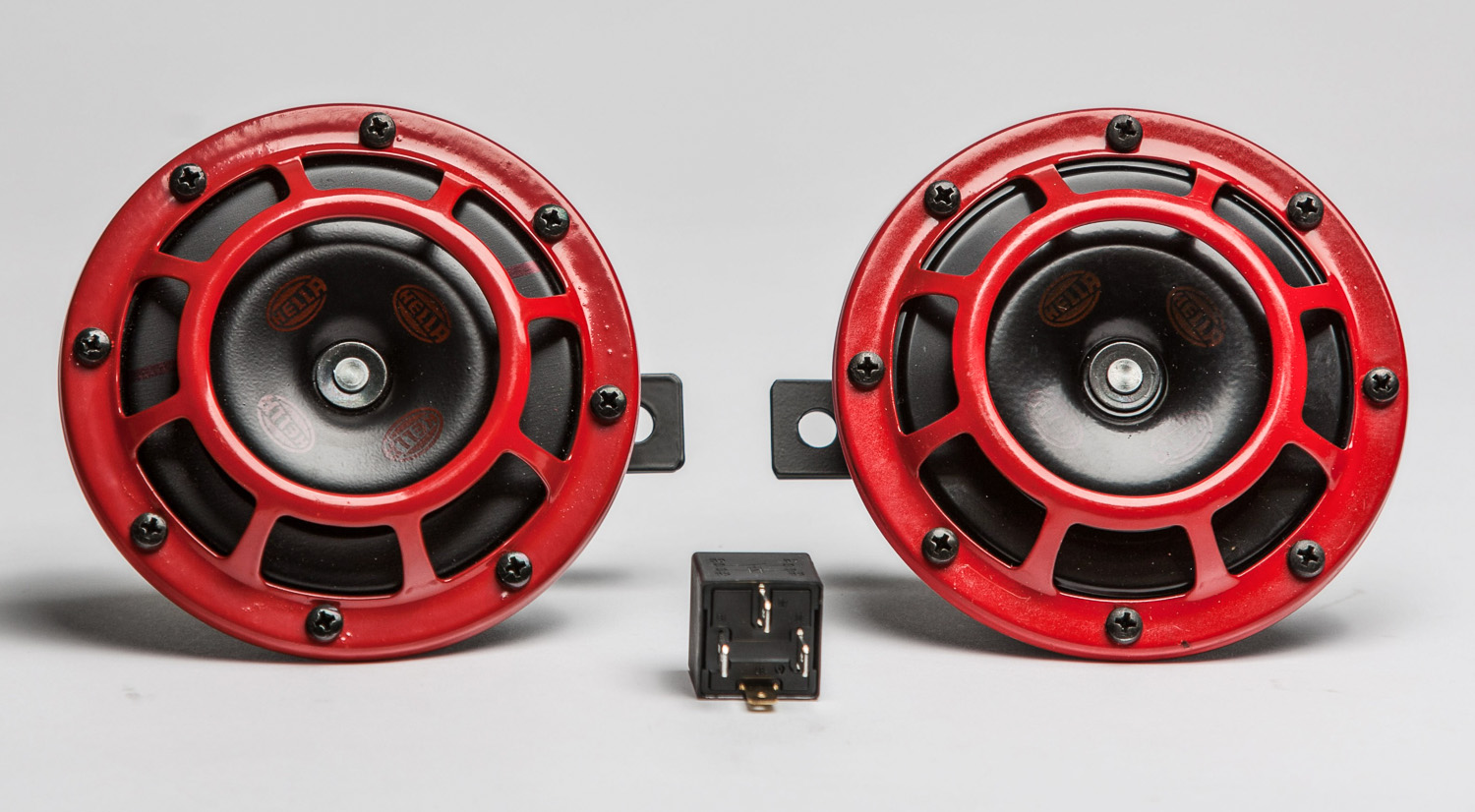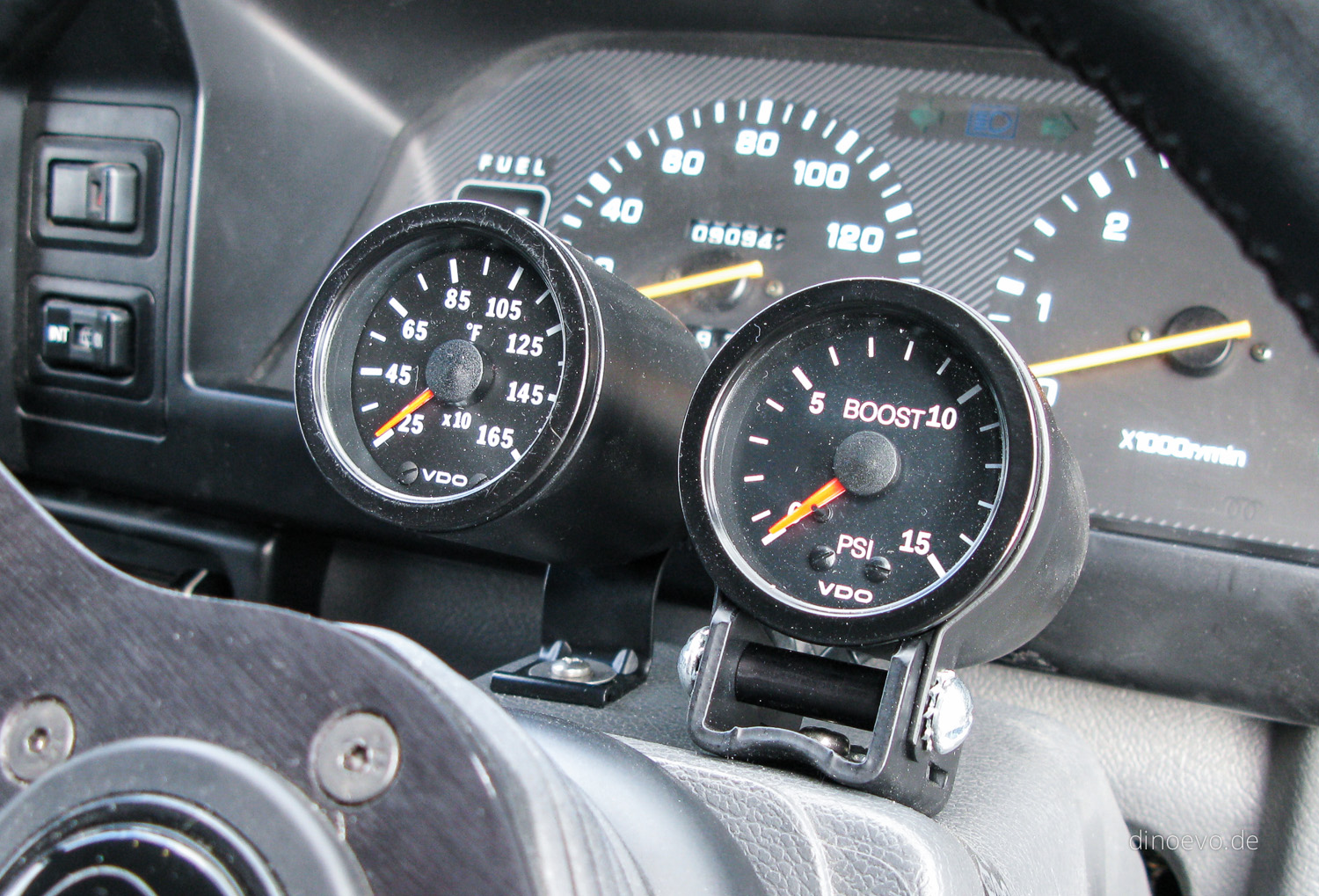
To know a little bit better what’s going on inside the engine I installed a pyrometer (for the exhaust gas temperature) and a boost pressure gauge. As location I decided to go right behind the steering wheel. This dead spot is perfect for two pods. I also wanted to keep the look similar to the stock dashboard, so the VDO gauges (from Summit Racing) seems to fit perfectly with their analog, black look and the green illumination.
The temperature sensor for the EGT was already installed a while ago, so I just had to wire up the gauges and hook up the vacuum line. We took the power from the radio and the ash-try light which was the closed and most easiest route. I’m quite happy with the outcome. The gauges (specially the pyro) will help to prevent any major engine failure due wrong driving.
A few tips:
- Make sure you get the right pod for your gauge, even if the diameter is the same, the length various widely.
- For the Delica a boost gauge up to 20psi is plenty. If you take a gauge with a larger scale you wont notice that much movement
- A pyro with a scale up to 1400°F is enough.
- Full mechanical boost pressure gauges tend to have a little silent whistle sound if you back off, which could get annoying if don’t mount it in a sealed pod.
p.s.: Sorry for not taking any photos from the install. I forgot the camera. Also if you want to read more about pyro and boost gauges on Delicas, check out this thread on the Canadian Forum.
First I want to say a big thank you to Jay for the time he spent to install our new dual battery system. Without him this modification wouldn’t be as nice and clean as it is.
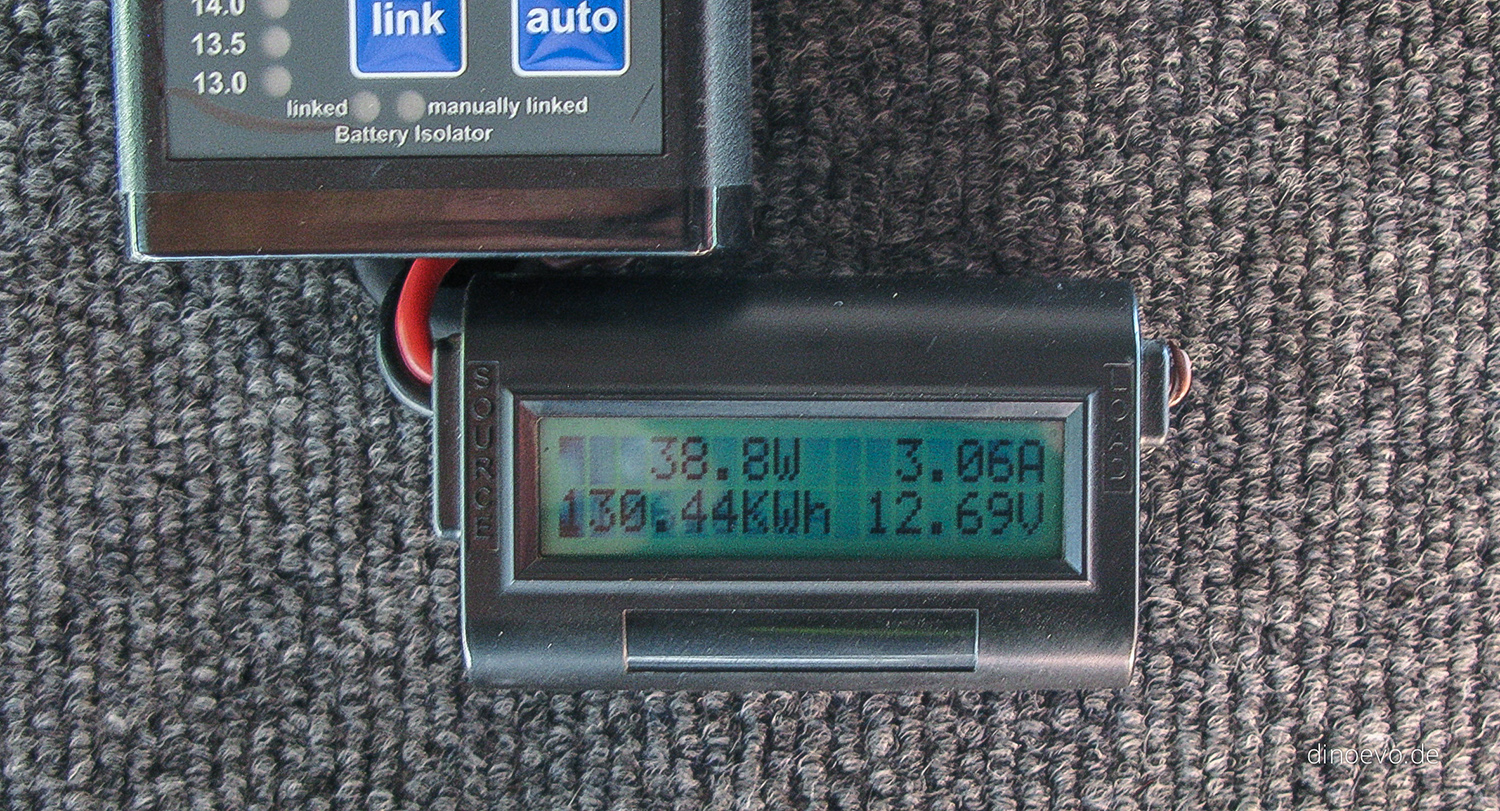
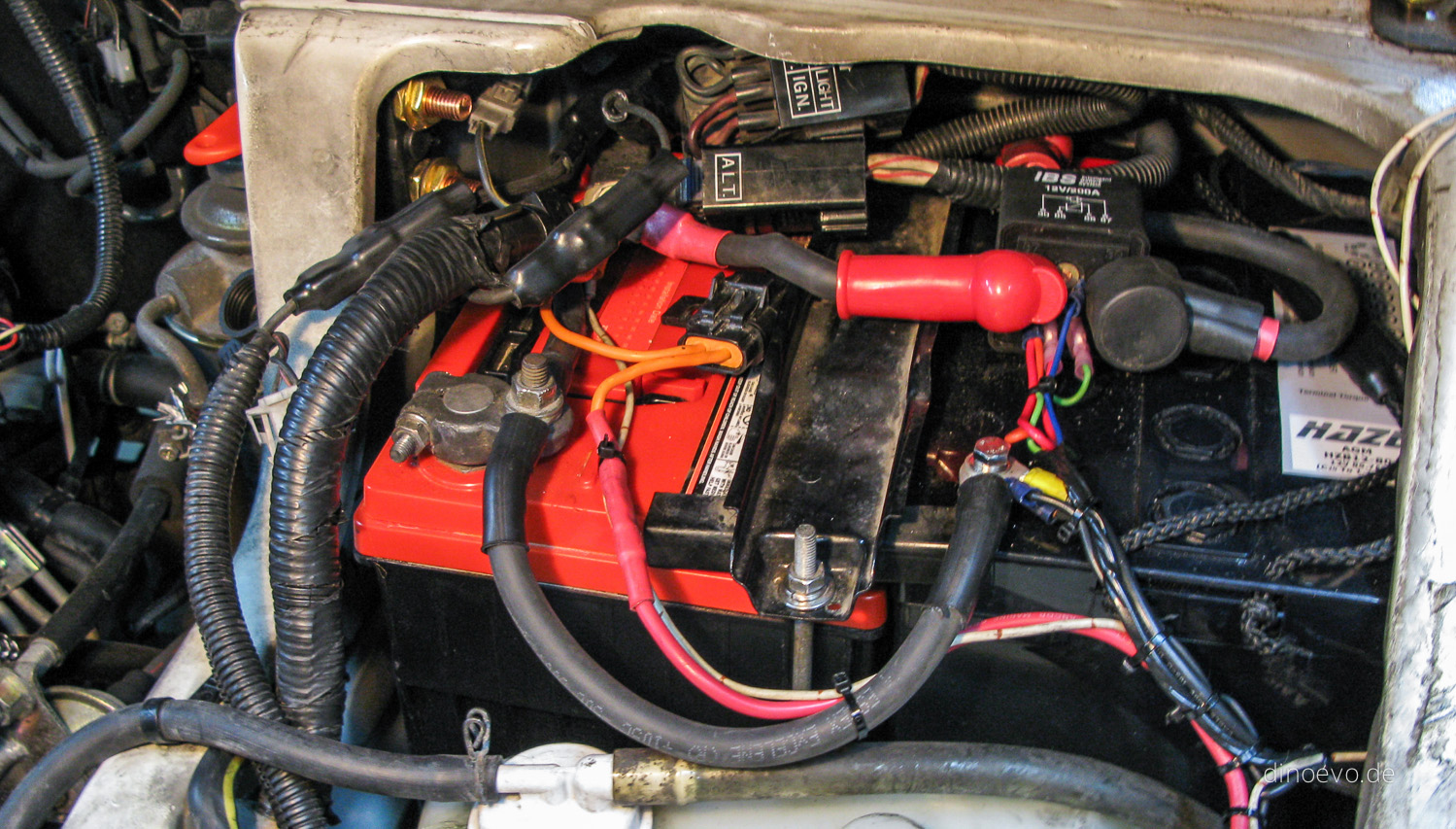
Many people at the exhibition installed the IBS Dual Battery system as part of the on-board power setup. Some people used the National Luna version but had no go experience with it due the not water proof solenoid and the cheap connectors. Obviously there was also the option to build my own monitor, but there are way too many upcoming mods on my list, so I wanted to save time. In the end we went with the IBS system for around CAD300. If you are interested what this system actually does, read this page.
The system itself is pretty simple. One heavy duty relay (200A/500A) and a well built remote with a lot of wires. We usually don’t need the remote while driving, so we installed it out of the way behind the passenger seat. The wiring can be kept very short this way. The relay is just on to of the batteries.
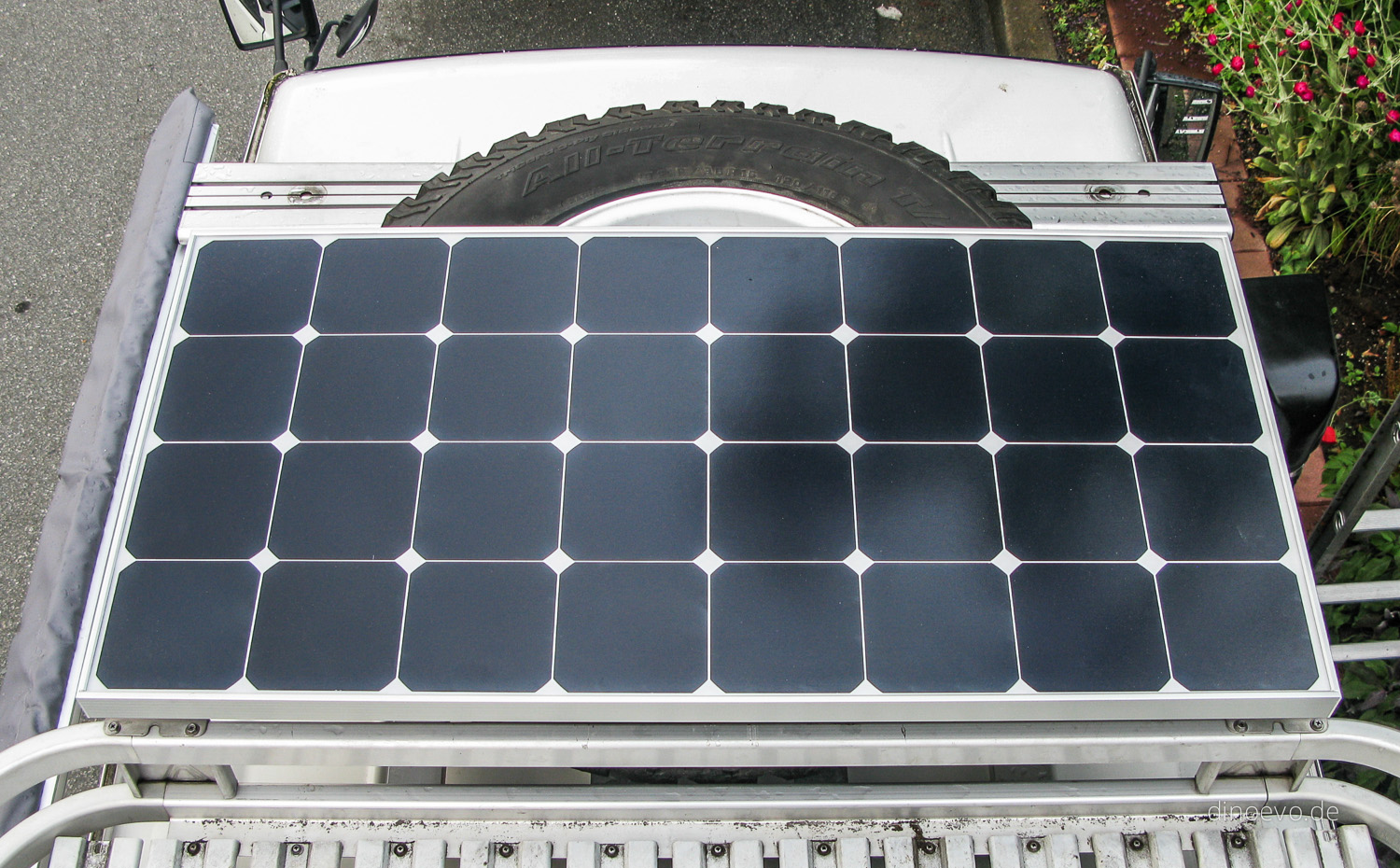
The battery compartment is quite small on a Delica, but I still didn’t want to move one battery inside the van (every inch counts), so I decided to go with a Odyssey 35-PC1400 as a starter battery and a Haze 80Ah (size 24) AGM deep cycle battery for the accessories. It’s not really huge, but we are not planing to have a lot of accessories on while in camp mode. Also the planed solar panels should extend the power a bit.
Jay, also installed a battery disconnector to prevent the batteries from draining while sitting for a longer time unused (e.g. when we want to ship the car in a container etc.)

One of the first interior appliance we bought recently is a proper compressor fridge. After years of ice- and 12v-coolers we finally got the right stuff. Coolers work ok for short trips, but anything longer than a weekend and you are in trouble or even worth you get some health issues with dewed food. It’s just so good to go to your fridge at any time of your trip and have properly cooled food and drinks and not soaking wet or half cold stuff.
Yes, it’s relatively expensive (CAD770 at Steveston Marine), but this is something that hopefully will work well for a long time and still can be used in the next few campers as well.
After reading reviews up and down and actually talking to people with different compressor fridges, we decided to go with a Engel MT35. Main reason was the outstanding quality of workmanship and the unique Engel Swing Motor. The patented Swing Motor, developed and manufactured in Japan (fits very well to a Delica :), is an electro-dynamic reciprocating device that connects directly to the piston of the compressor. You can read more about the technical details on their website. In short it should hold up pretty strong any long washboard roads and heavy mobile usage.
Downside of a proper fridge is the additional weight and the bigger size, but from our experience so far it is totally worth it.
This was really a hard decision. Way too many good fog lights out there, but in the end the
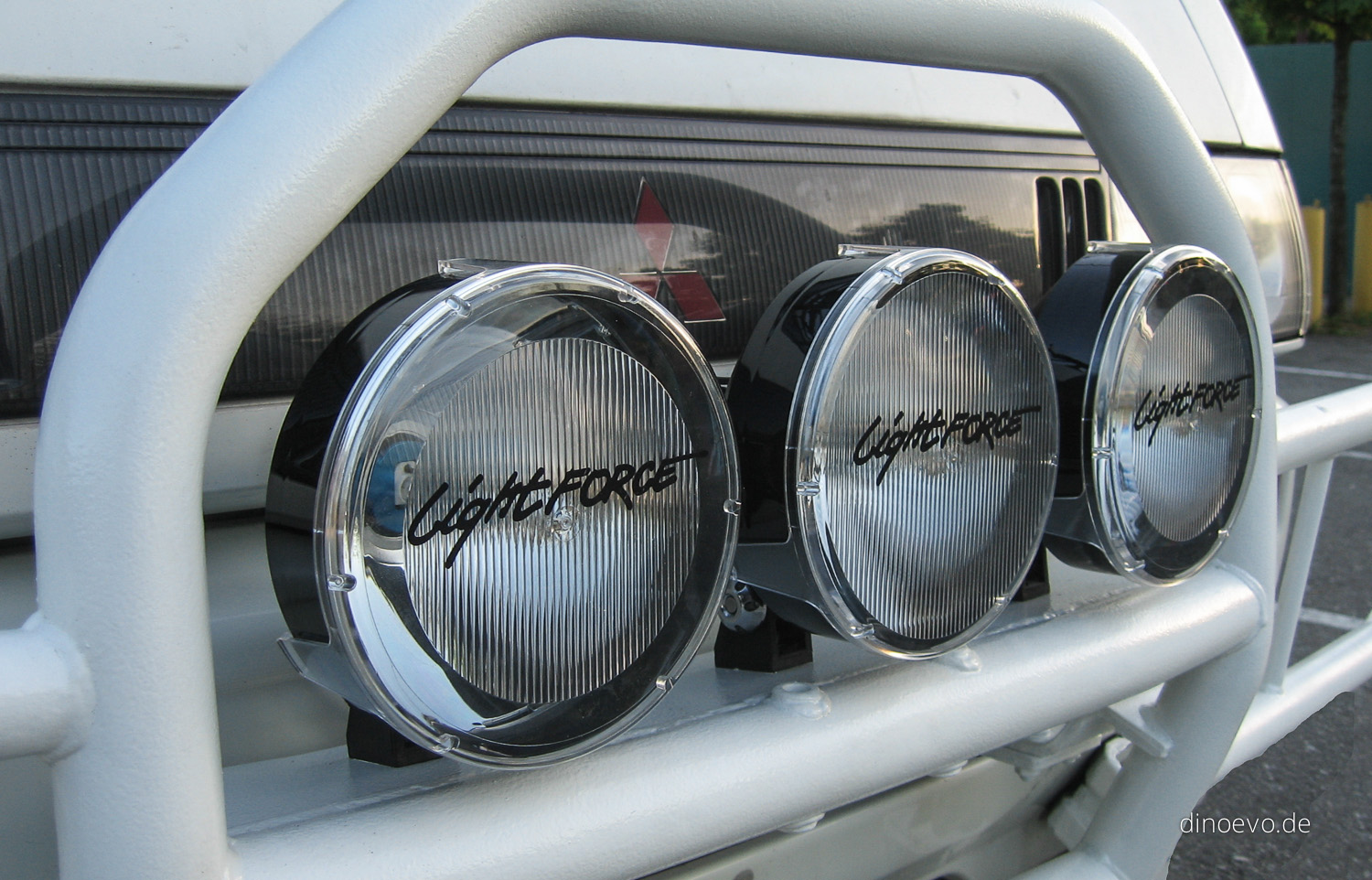
Lightforce Striker 170 HID made it onto the bull bar. Main reason: Very light weight, low energy consumption (just 35W/3amp each), high-power light output, different lenses (wide beam, combo, spot), very good reviews and apparently good customer support.
At the beginning I thought two lights would be enough, but once I saw how nice three lights would actually fit, there was no way back. Unfortunately Lightforce just sells them in a set, so I bought a box for myself and shared one with a good friend.
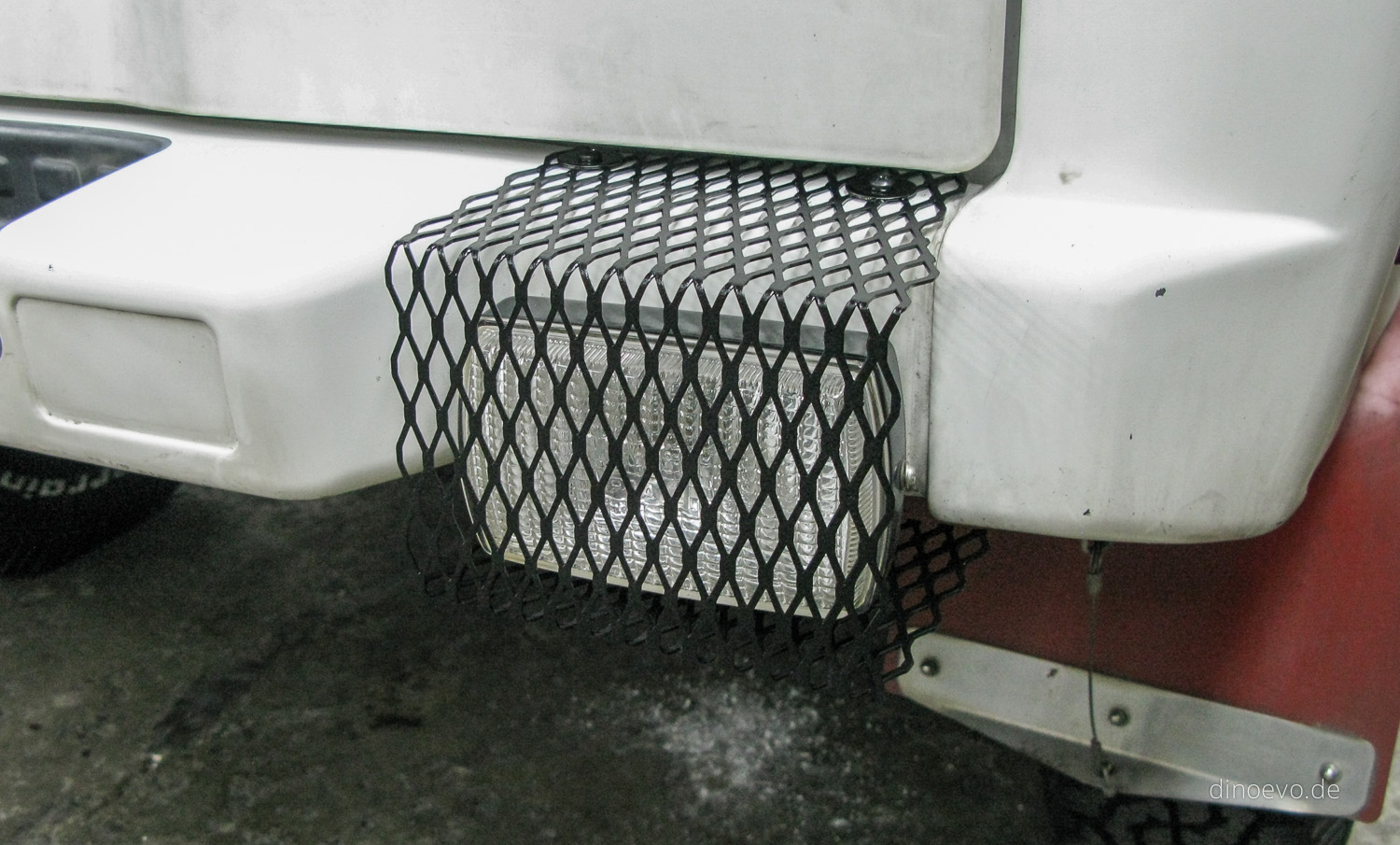
Unlike normal lights you have quite a bit of electrical stuff (igniter and ballast) to hide with three lights. At the beginning we thought to hide everything inside the van, but apparently you are not allowed to cut the cables, so everything had to be mounted outside. I went to the Metal Supermarkets and found a nice piece of perforated aluminum, cut it in the right shape and built two little covers to hide the cables on each side. It also worked great to secure everything with tie straps on it. After screwing it to the light mount, the ballasts were hidden behind the left indicator light. The lights are secured with special lock-nuts which hopefully protects them against thieves.
I’m very happy with the outcome of the whole bull bar. Everything looks how I had it in my mind. I haven’t got time to try the lights properly, but I already can tell you one thing. They are fricking bright.
Thanks again to my friend Jay for the support on this project!
An update on what we have worked on this week.
The Delica came with a pretty sweet and solid aluminum roof rack. Unfortunately some of the bolts were rusted quite badly, so we took it off cleaned it properly and replaced the hardware with stainless steel. Now everything is nice and shiny.
The light bar in the front came off too, but I don’t think I’ll put it back, because I rather get some strong off-road lights on the front push bar and maybe mount some additional lighting on the roof rack.
The rims offset are perfect, so the wheels are not sticking out of the fender wells. Therefore I took the fibreglass fender flares off and sold them to a fellow Delica owner. To get the maximum articulation without hitting metal I had to grind down the fender wells quite a bit though. After all this trimming we mounted the modified mud flaps back with some custom brackets.
My friend Jay likes to work on all the electrical stuff, so he discovered a few weird “spaghetti” wiring from the previous owner in Japan under the carpet and behind the dashboard. We want to start fresh, so he took almost everything out. Also the old batteries had to go too. He replaced it for now with a single Odyssey PC1400 to get not stranded in the next few month. More on this subject once we work on a proper dual battery set-up.
With way larger tires than stock we also need to go to an alignment shop. A few people recommended Dale’s Alignment in Langley. Off we went to them yesterday. Nice guys for sure with – as far as I can tell – professional 4-wheel laser alignment set-up.
Continue reading ‘Roof rack, fender wells, mud flaps, battery and alignment.’
Recent Comments